


How can a simple piece of clay support children’s English, creativity and communication?
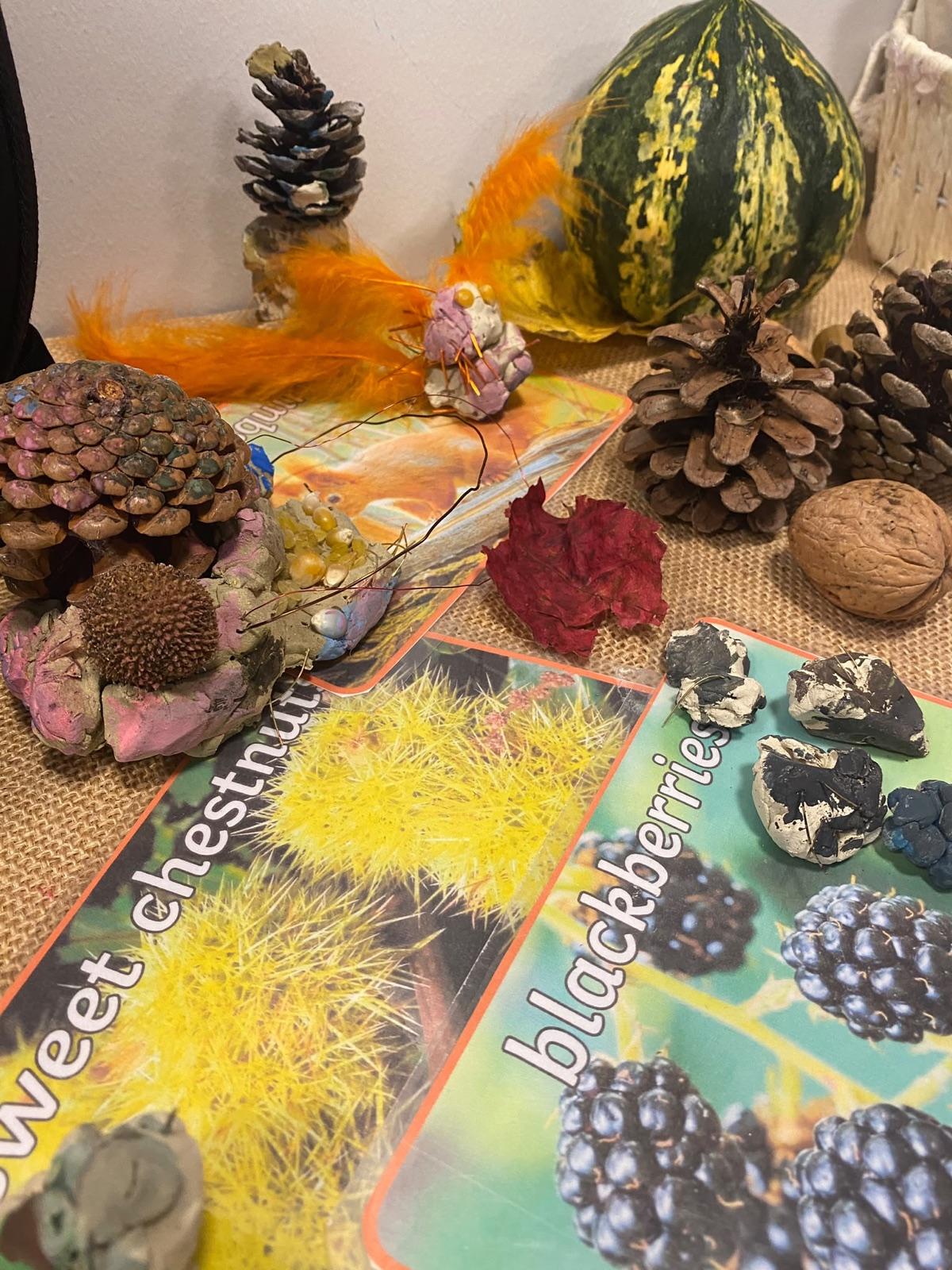
In a Reggio Emilia inspired learning environment, English becomes more meaningful when children can use it to explore their ideas and express themselves. During our autumn explorations, we invited children to choose from a collection of autumn themed photographs and bring their ideas to life using clay.
Some children created sweet chestnuts and explored their spiky textures, while another child, inspired by a squirrel, decided to build a home for it. This idea opened up conversations about homes and families, taking our vocabulary far beyond the original autumn theme.
This is how language evolves through children’s curiosity. A focus on autumn can naturally lead to new vocabulary about animals, shapes, textures and family. As children create, they have authentic reasons to communicate. Open-ended questions such as “What are you making?” and “How does it feel?” encourage them to describe, question and share their ideas in English. Even a single word, a short phrase or a gesture accompanied by language becomes a meaningful part of this process.
Clay also encourages imagination, experimentation and problem-solving. As children observe one another’s creations, exchange ideas and listen to their friends, they develop opportunities for social interaction and communication.
By combining English with open-ended materials, we create an environment where vocabulary grows naturally, speaking develops through meaningful interactions, and creativity leads the learning process. English becomes more than a language to learn; it becomes a language children can use to think, create and connect with others.